On Monday 22 June, 12-6PM (the day before the NIME Conference) the Digital Music Theranostic Lab hosted a MARC Open Day at King’s College London.
The day featured Distinguished Lectures by Professor Anna Huang (MIT) and Professor Roger Dannenberg (Carnegie Mellon University), an open data collection with Ravel’s Piano Trio and performer heart-breath visualisations, demonstrations of immersive audio and the magnetic stacco instrument, presentations/performances by members of MIT’s Music Technology and Computation Graduate Programme, and general socialising. The event took place on both sides of Waterloo Bridge.
12-2PM at the James Clerk Maxwell Building — part of the KCL Waterloo Campus, 57 Waterloo Rd, London SE1 8WA; closest tube station: Waterloo
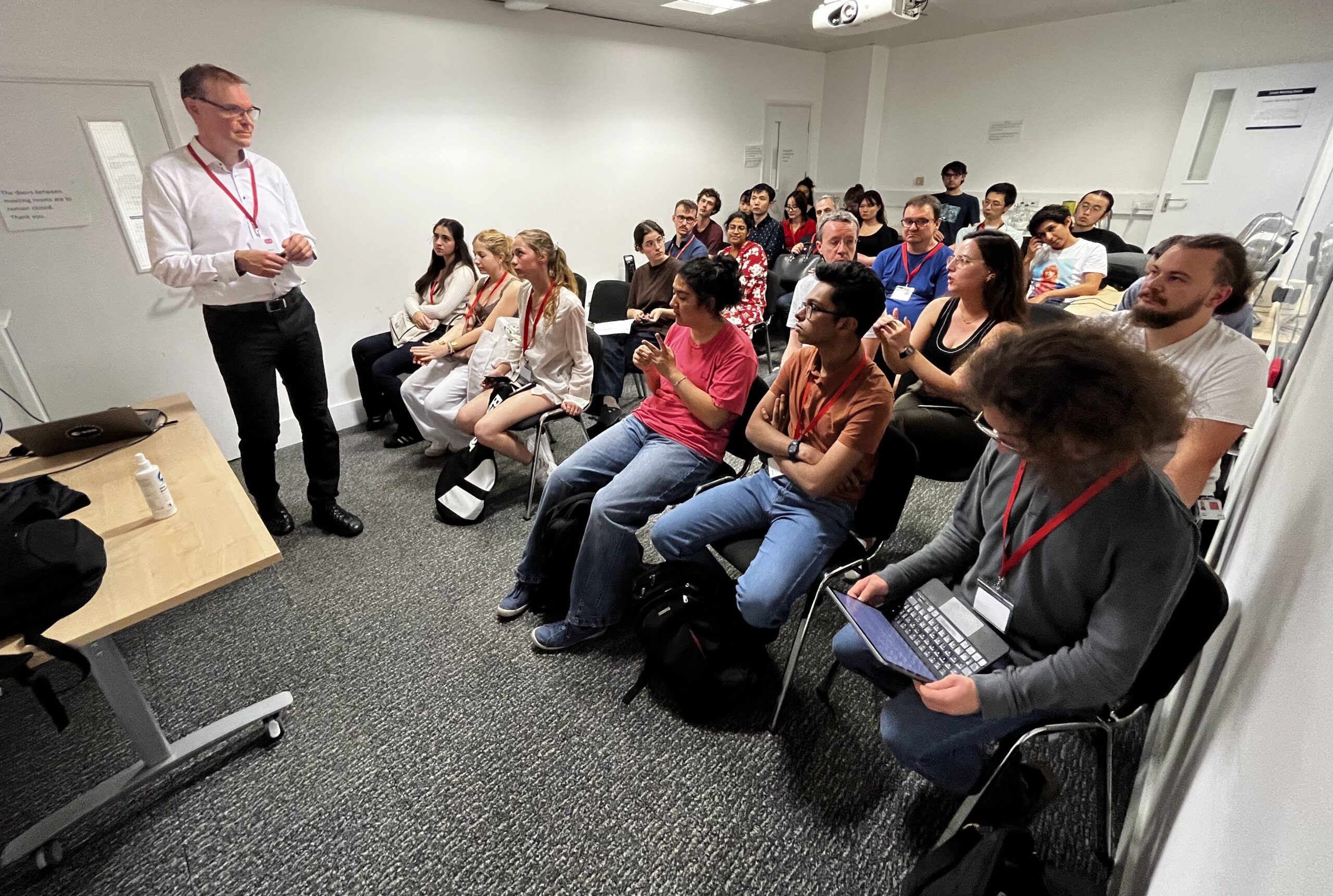
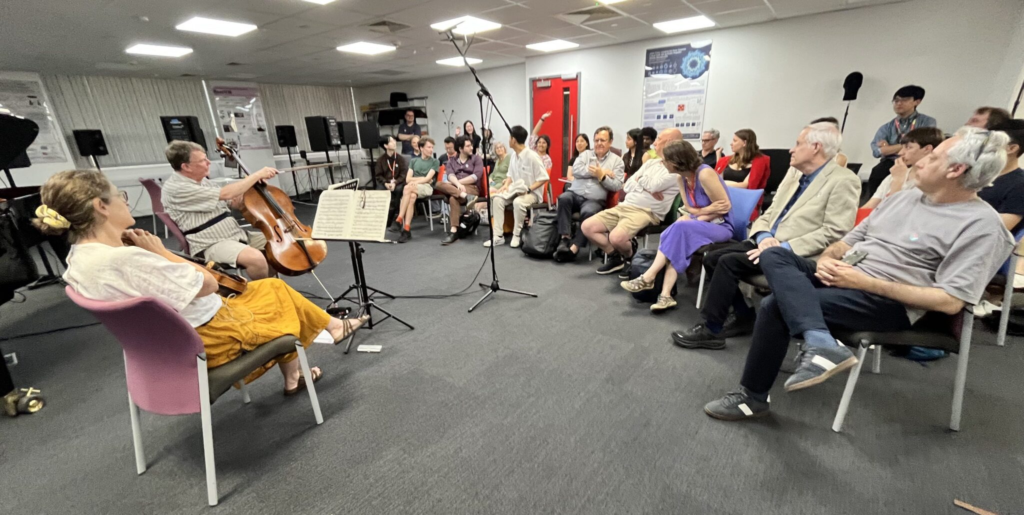
The Open Day started at 12noon with an open (physiological) data collection session with Hilary Sturt (violin), Ian Pressland (cello), and Elaine Chew (piano) performing the Modéré (first movement) from Ravel’s Piano Trio with real-time visualisation of performers’ ECG, respiration, and heart rate variability followed by a Q&A.


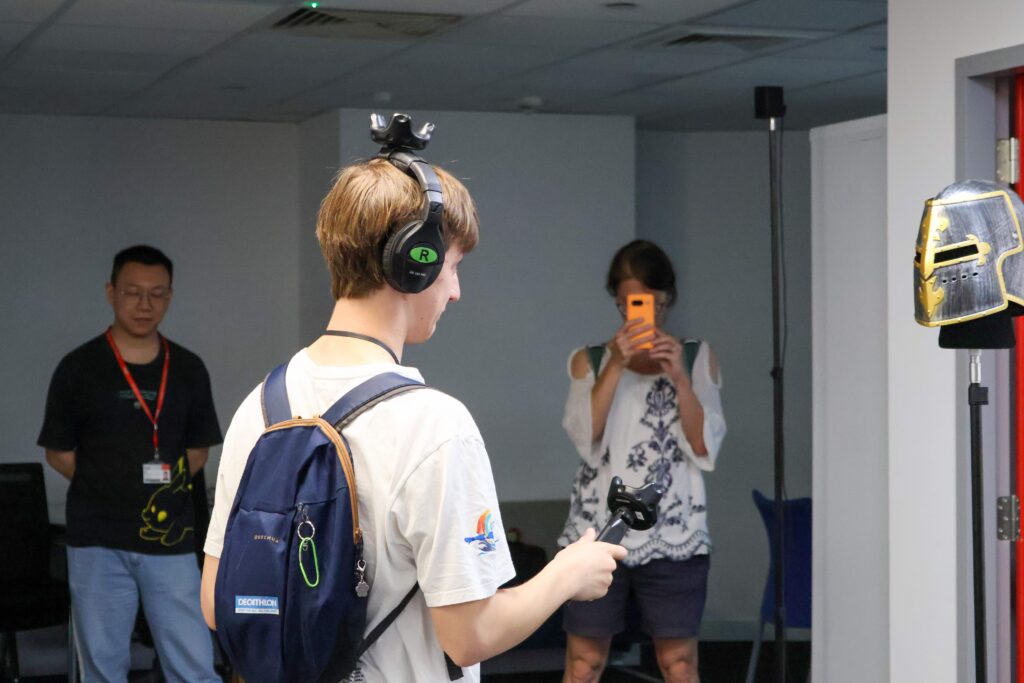
The Audio Lab presented immersive and mixed reality audio demonstrations in the form of a steerable surround sound system developed at King’s, a MagicBeans advanced acoustic simulation with head-tracking headphones (a collaboration with Gareth Llewellyn and The Third Orchestra supported by King’s Culture Creative Practice Catalyst Fund), and a sound bar demo.
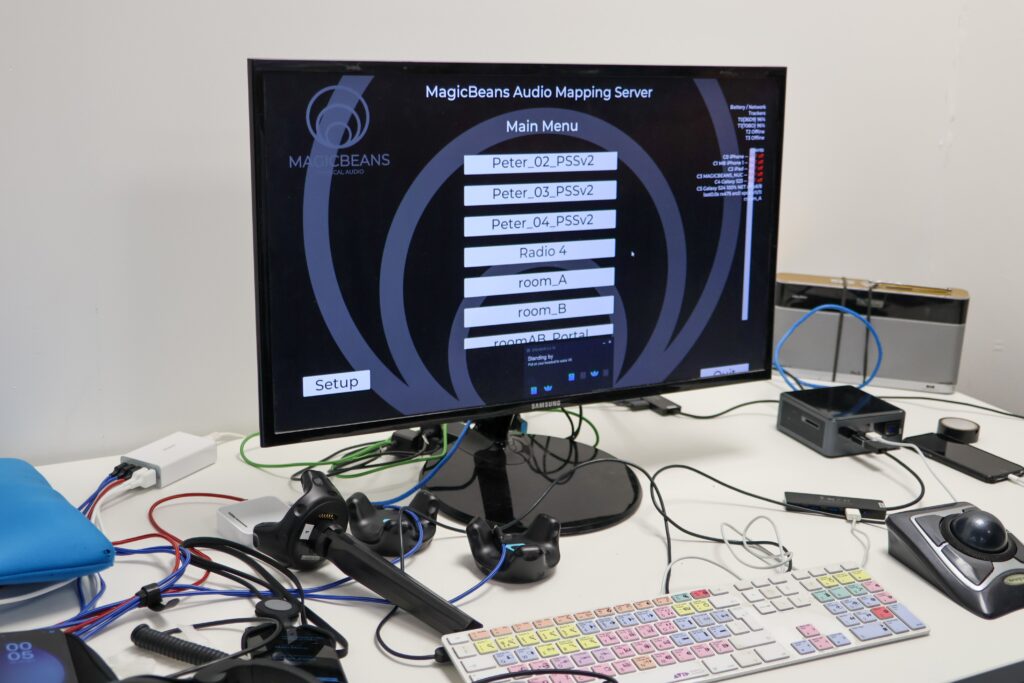
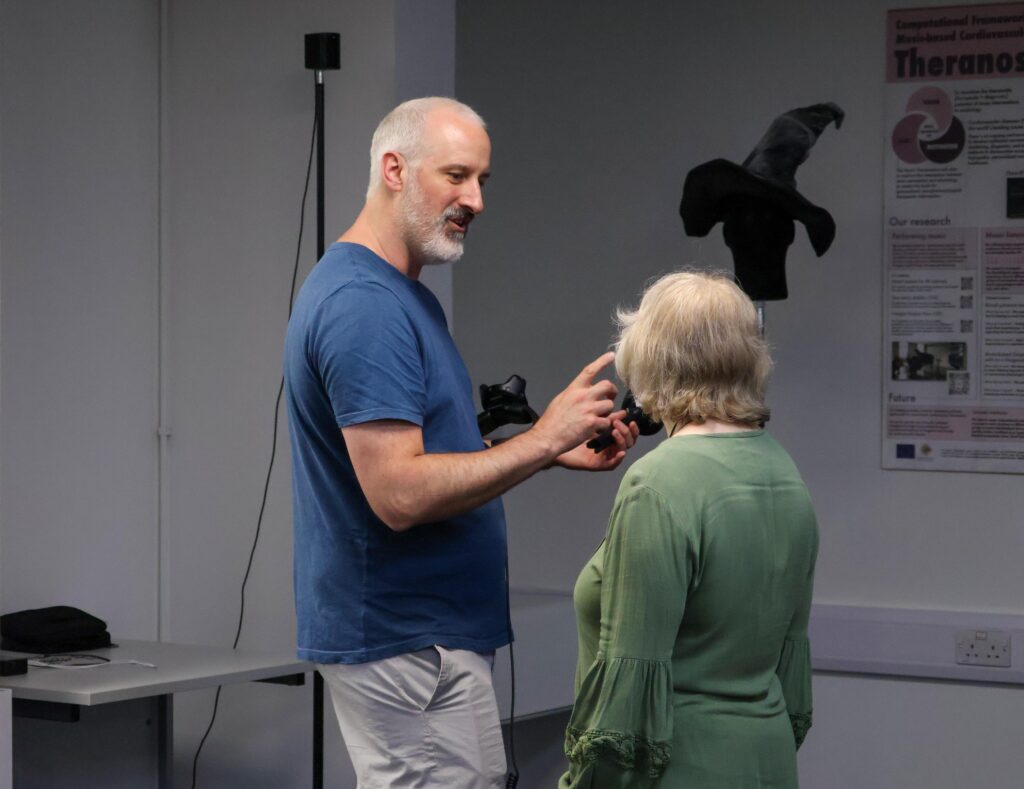
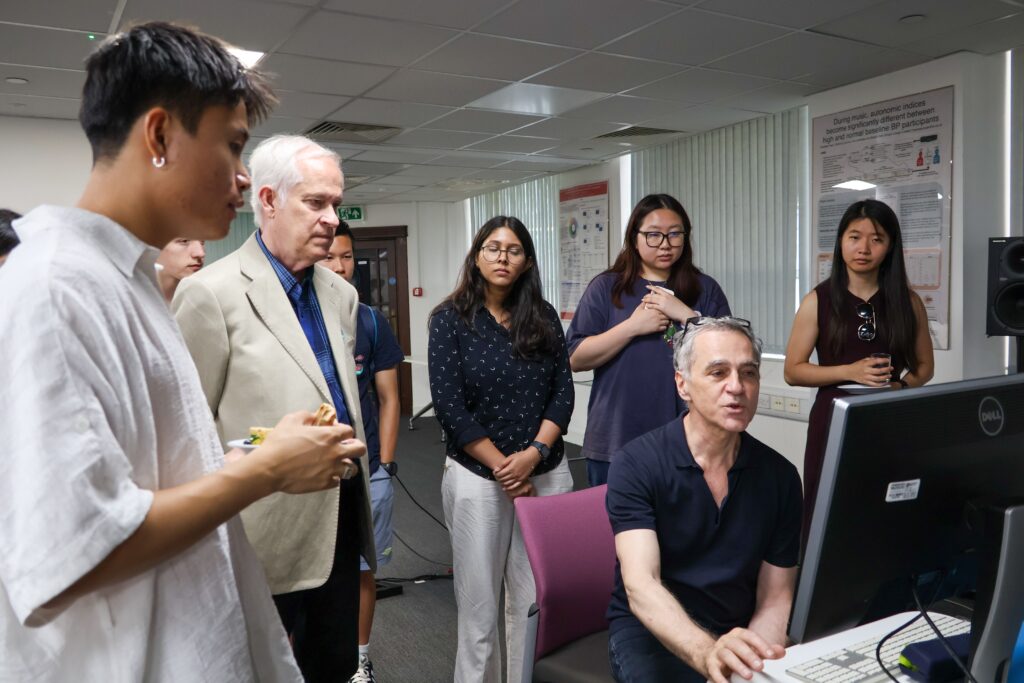
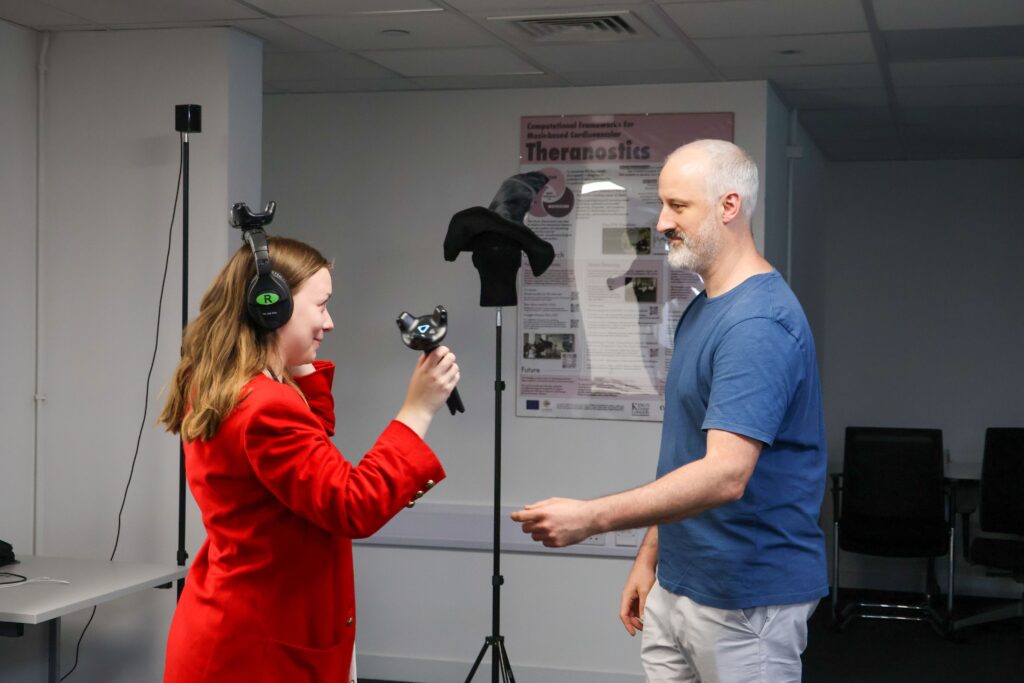
King’s AI+ Fellow Robert Laidlow showed the stacco instrument and his use of live AI to melt timbres together and control live-processed sound as used in his compositions.
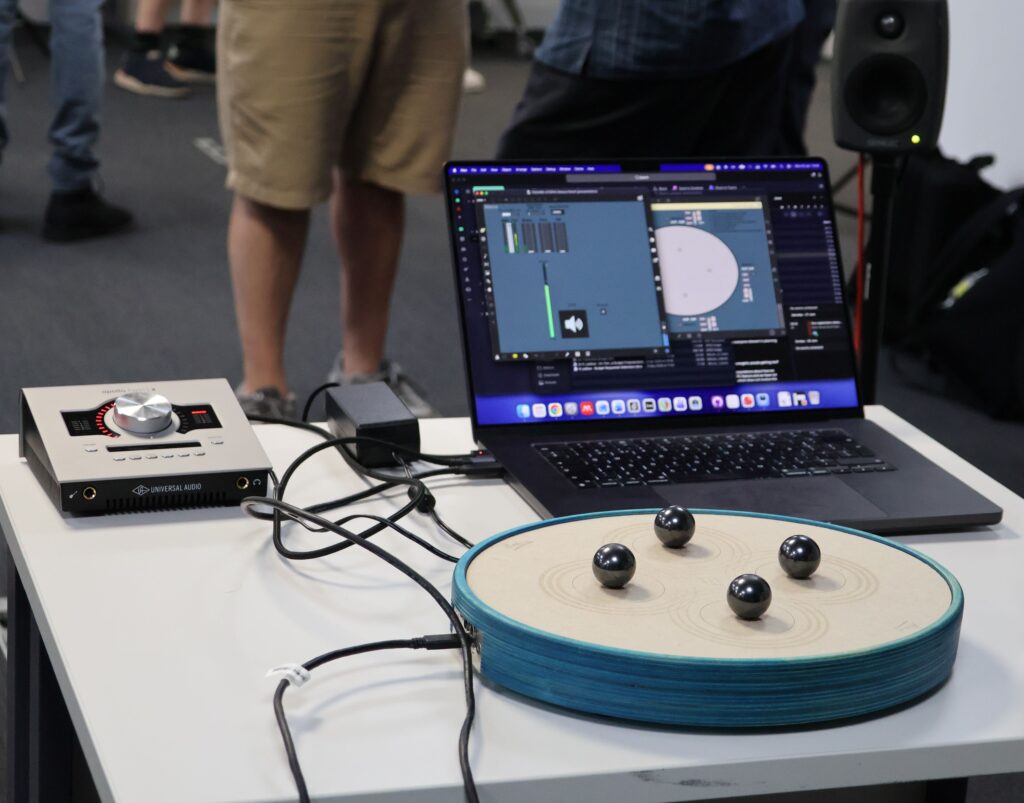
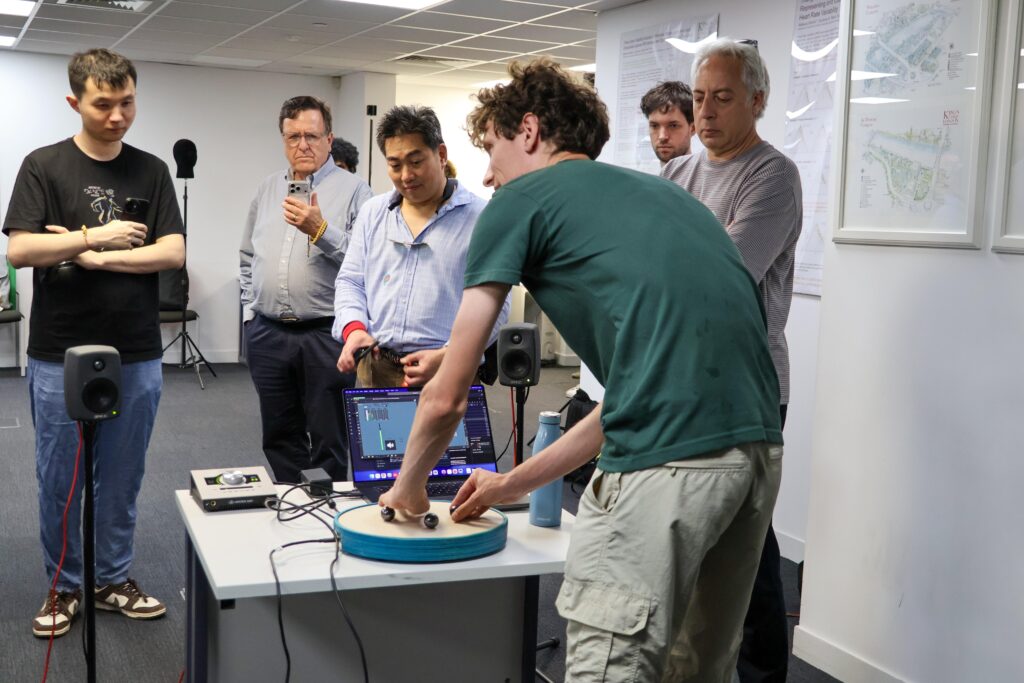
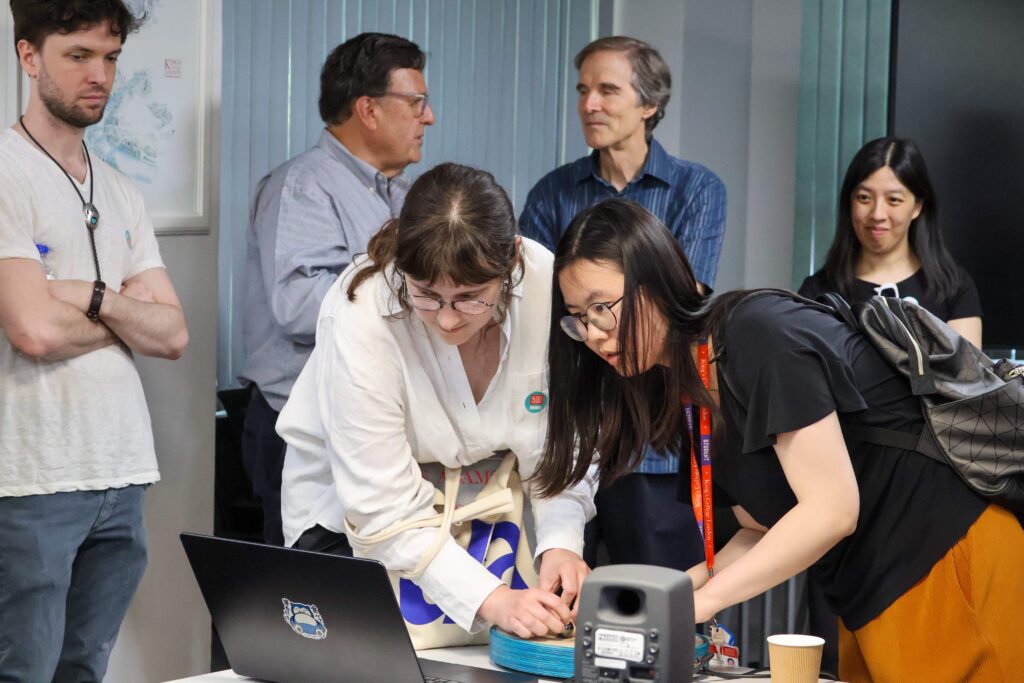


2.30-6PM at St David’s Room — King’s Building, KCL Strand Campus, Strand, London WC2R 2LS; closest tube station: Temple
The second part of the day took place across the Thames at St David’s Room in the King’s Building, chaired by Robert Laidlow and Mark Gotham. There, Anna Huang gave a Distinguished Lecture entitled, “In Search of Human-AI Resonance”.

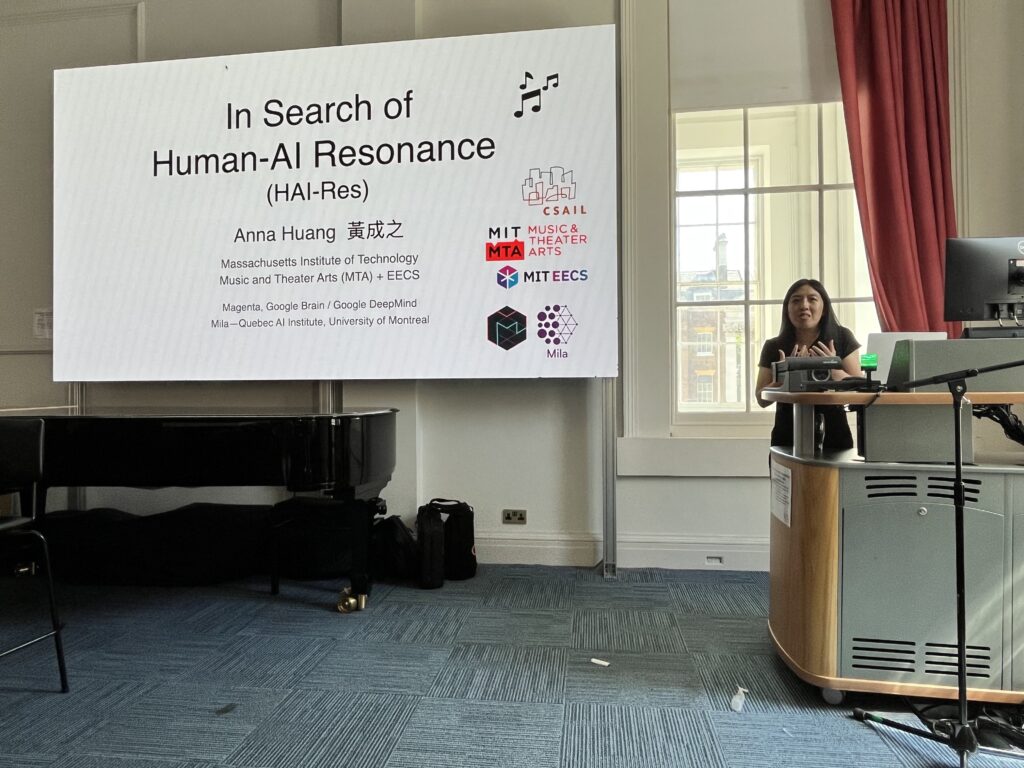


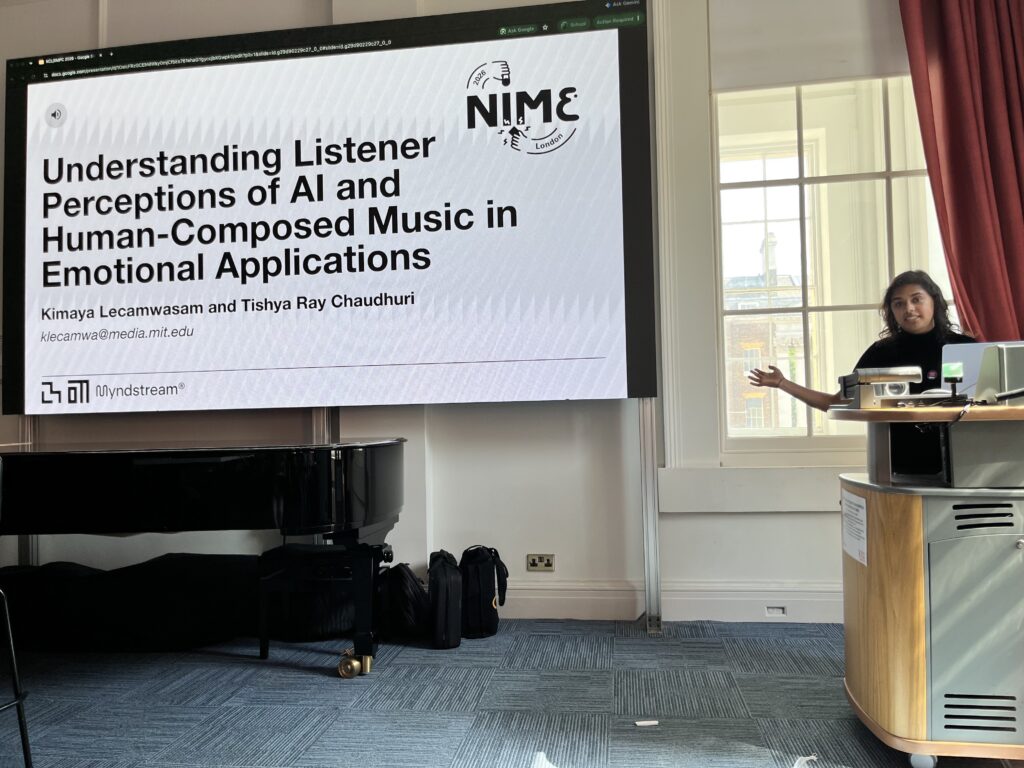
Anna’s talk was followed by three presentations by MIT graduate students Kimaya Lecamwasam on “Understanding Listener Perceptions of AI and Human-Composed Music in Emotional Applications”, Heidi Lei on “Gesture Controlled Systems for Live Piano Jamming”, and a performance of Hindustani vocal music by Nithya Shikharpur on “The Moving Drone”.


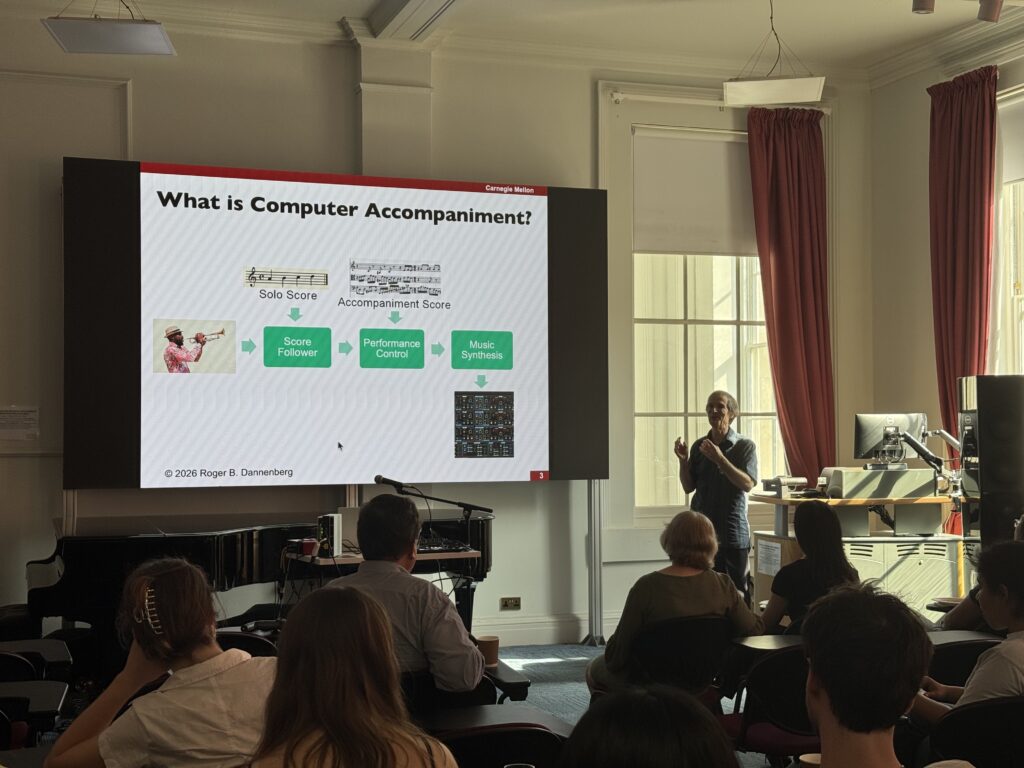
Next, Mark Gotham gave a very short introduction to other MARC labs, followed by Roger Dannenberg’s Distinguished Lecture entitled, “Score Following and Alignment as Optimal Partitioning”



Like all good open days, it ended with a gathering at the pub.
Acknowledgements
The inaugural MARC Open Day was supported in part by the NMES Research Culture Fund and the Information Processing Systems Group ROIS Fund.
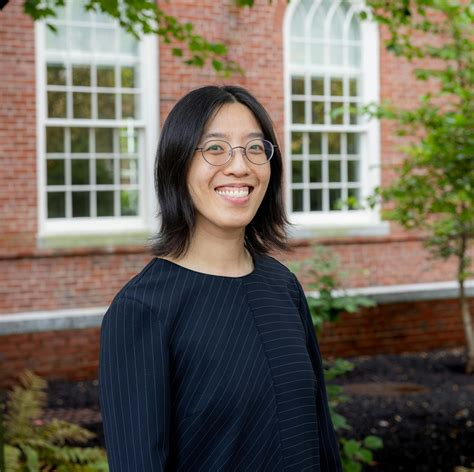
Cheng-Zhi Anna Huang is an associate professor at the Massachusetts Institute of Technology (MIT), with a shared position in the Music & Theater Arts Section and the Department of Electrical Engineering and Computer Science. She joined MIT in fall 2024 to launch the new, interdisciplinary Music Technology and Computation Graduate Program. For the past 10 years, Huang has been with the Magenta team in Google Brain and then Google DeepMind, spearheading efforts in generative modeling, reinforcement learning, and human-computer interaction. In 2018, she created Music Transformer, a breakthrough in generating music with long-term structure and the first successful adaptation of the transformer architecture to music. Huang is the creator of the machine-learning model Coconet, which powered Google’s first AI Doodle, the Bach Doodle. In two days, Coconet harmonized 55 million melodies from users around the world. Currently the Rieman and Baketel Fellow for Music at the Radcliffe Institute for Advanced Studies, Huang previously held a Canada CIFAR AI Chair at Mila – Quebec Artificial Intelligence Institute. She was a judge then organizer for the AI Song Contest in 2020–2022. She holds a PhD from Harvard University, where she spent several years in the Harvard University Studio for Electroacoustic Composition. She did her master’s at the MIT Media Lab and a dual bachelor’s in music composition and computer science at the University of Southern California.
Professor Anna Huang’s Distinguished Lecture
In Search of Human-AI Resonance
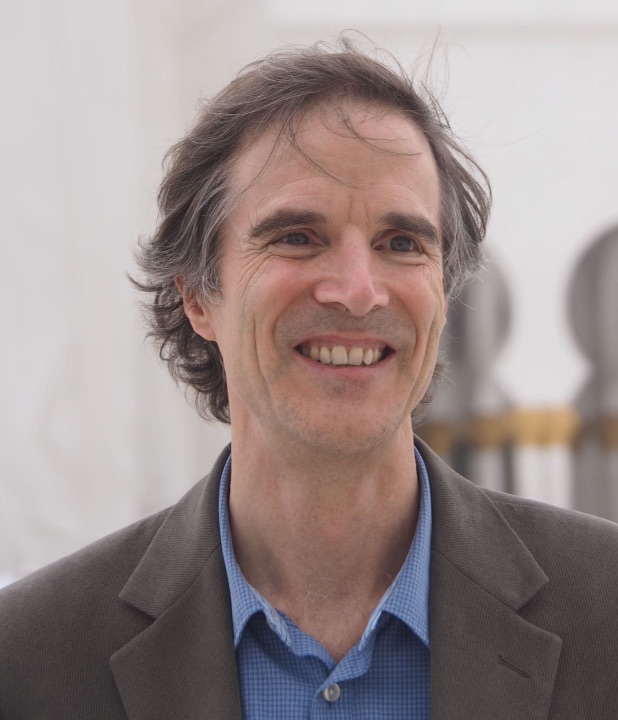
Roger B. Dannenberg is Emeritus Professor of Computer Science, Art & Music. He received a Ph.D. in Computer Science from Carnegie Mellon University and is a Fellow of the Association for Computing Machinery, known for his research in the field of computer music. He is the co-creator of Audacity, an audio editor that has been downloaded 100’s of millions of times, and his patents for Computer Accompaniment were the basis for the SmartMusic system used by hundreds of thousands of music students. His current work includes live music performance with artificial computer musicians, automatic music composition, interactive media and high-level languages for sound synthesis. Prof. Dannenberg is also a trumpet player and composer. He has performed in concert halls ranging from the historic Apollo Theater in Harlem to the modern Espace de Projection at IRCAM in Paris. Besides numerous compositions for musicians and interactive electronics, Dannenberg co-composed the opera La Mare dels Peixos with Jorge Sastre, and translated and produced the opera in English as The Mother of Fishes, in Pittsburgh in 2020.
Professor Roger B. Dannenberg’s Distinguished Lecture
Score Following and Alignment as Optimal Partitioning
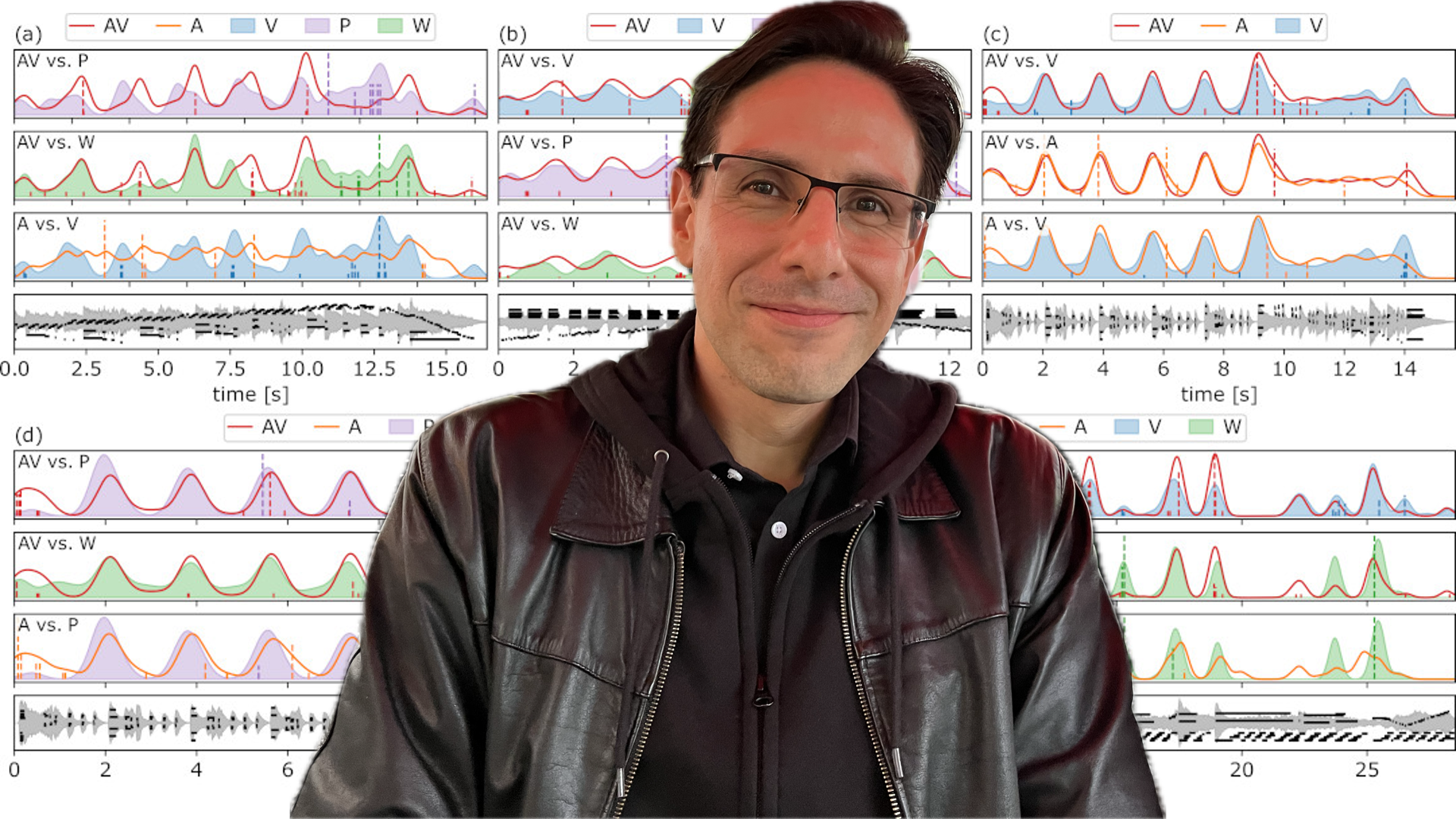
Score Following is the problem of matching a live music performance to a symbolic score, a problem that has been studied for over 40 years. Score Following is the online version of Score Alignment, the offline problem where there is access to the full performance. I will describe a new approach to both based on partitioning and dynamic programming. Music alignment problems are similar to many sequence alignment problems found in speech recognition, computational biology and other fields. The main difference is that traditional sequence alignment assumes that sequences are totally ordered, while in polyphonic music, there are “chords” where the order of performed notes is arbitrary, giving a partial order. Most score followers search for the best assignment of each performed note to a score position (chord), while our new partitioning approach searches for the best placement of boundaries between performed notes to maximize the correspondence between the resulting partitions and chords. In addition to some formal evaluation, I will present excerpts of Felicità, a chamber opera performed with Accomplice, a new computer accompaniment system with keyboard input.
Programme
| 12:00 | Open rehearsal of Ravel and Schubert Op.100 Trio with performers’ heart-breath visualisations presented by Hilary Sturt, Ian Pressland, and Elaine Chew |
| 13:00 | Lunch Immersive Audio Demo & Embodied Virtual Sounds by Zoran Cvetkovic, KCL Stacco Instrument Demo by Robert Laidlow, KCL |
| 14:00 | Walk to Strand Campus |
| 14:30 | Distinguished Lecture by Anna Huang, MIT |
| 15:30 | Break with refreshments |
| 15:45 | Kimaya Lecamwasam, MIT, on “Understanding Listener Perceptions of AI and Human-Composed Music in Emotional Applications” |
| 16:00 | Heidi Lei, MIT, on “Gesture Controlled Systems for Live Piano Jamming” |
| 16:15 | Nithya Shikharpur, MIT, on “The Moving Drone” |
| 16:30 | Break |
| 16:45 | A Very Short Introduction to further MARC labs including the Music Computing Lab (MCL@KCL), and to Keeping Score and AMADS. |
| 17:00 | Distinguished Lecture by Roger Dannenberg, CMU, on “Score Following and Alignment as Optimal Partitioning” |
| 18:00 | Independent Social Event at a nearby pub |
The MARC Open Day chairs are Natalia Cotic, Ege Erdem, Wentao Hao, and Ananth Venkatesh. Please contact the Open Day chairs with any queries at cosmos@kcl.ac.uk .